Picking a testing lab often comes down to whoever responds first with a reasonable quote, especially when you're on a deadline and just want the project moving. But not every compliance testing lab operates the same way, and the differences matter more than they might seem to from the outside. Two labs can quote the same price for what looks like the same scope of work and still leave you in very different positions six weeks later, depending on how they handle documentation, failures, and international acceptance.
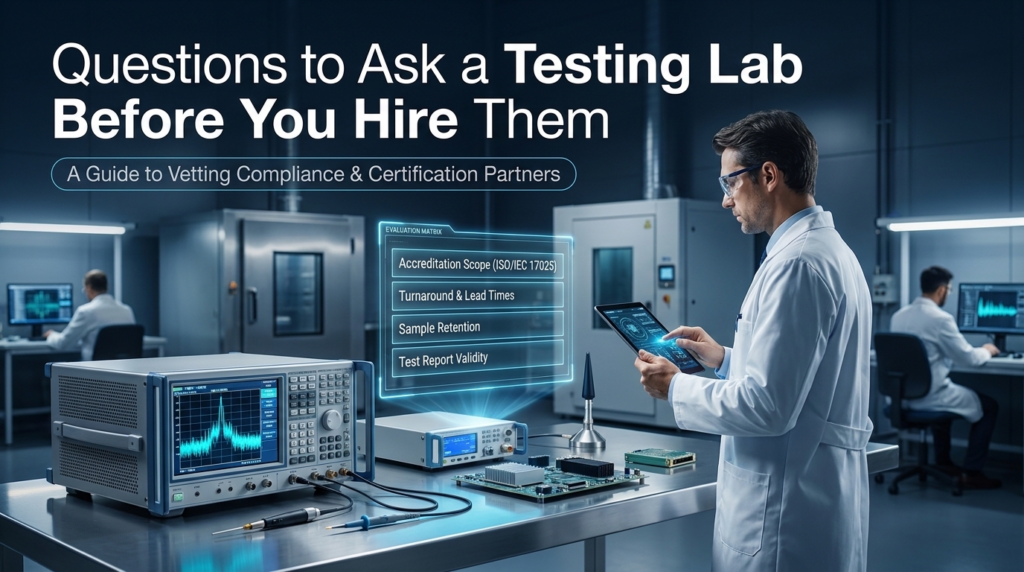
Before committing to one, a handful of direct questions can save you from a slower process, a report that doesn't hold up where you need it to, or costs you didn't see coming.
Is Your Accreditation Current, and What's It Scoped To Cover?
Accreditation isn't all-or-nothing. A lab might be accredited for some standards and not others, so it's worth confirming specifically that they're accredited for the standard your product needs, not just accredited in general. Ask which standards fall within their scope and confirm it against the accreditation body's public directory if you want to double-check. It's also worth asking when their accreditation was last renewed, since accreditation isn't permanent and a lapse or gap in coverage can complicate things later if you didn't catch it upfront.
Will My Test Report Be Accepted in My Target Countries?
A lab that regularly works with international clients should be able to tell you, country by country, where their reports are accepted directly and where additional steps (like a CB Certificate) might still be needed. If a lab can't answer this clearly, that's worth noting. This question matters more than it might seem, because assuming a report will transfer smoothly to a new market and finding out otherwise after the fact is one of the more expensive mistakes in this process. A lab with real international experience should be able to walk you through the specific path for each country you're targeting, not just say "it depends" and leave it there.
What Happens If My Product Doesn't Pass on the First Attempt?
This is a good question for understanding how a lab actually operates. Some labs treat a compliance gap as the end of that testing cycle, requiring a new project and a new queue position. Others treat it as a continuation, moving straight to a fix recommendation and resuming testing. The difference has a real impact on your timeline and budget if something doesn't pass cleanly, and first-time failures are more common than people expect, especially on newer products. It's worth asking specifically what a retest looks like in terms of cost and turnaround, not just whether one is possible.
What Documentation Do You Need From Me, and Why?
A lab that gives you a clear, specific list (schematics, bill of materials, user manuals, and so on) and explains why each piece matters is generally easier to work with than one that's vague about requirements upfront. Vague documentation requirements tend to lead to delays later, usually because something gets requested mid-testing that could have been flagged on day one. Getting the full list early also gives you a chance to gather everything in parallel instead of in a back-and-forth that stretches the timeline out by weeks.
How Is Cost Determined, and Can I Get a Firm Quote?
Ask what specifically drives cost for your type of product, and whether you'll get a firm number after documentation review or just a rough estimate. A lab that can explain their pricing logic clearly is generally more trustworthy than one that keeps costs vague until the project is already underway. It's also reasonable to ask what triggers additional charges beyond the base quote, such as retesting, expedited timelines, or extra sample units, so you're not surprised by a change order partway through.
Do You Offer Support Beyond Testing, Like In-Country Submission?
Getting a test report is often not the last step for international market entry. Some labs offer support for the in-country registration or submission process that follows testing; others expect you to manage that separately. Knowing which one you're working with upfront helps you plan the full project, not just the testing portion. If a lab doesn't offer that support directly, it's worth asking whether they can at least point you to someone who does, since coordinating that handoff yourself is a lot easier when you know it's coming.
Why These Questions Matter More Than Price Alone It's tempting to shop primarily on cost, but the cheapest quote isn't worth much if the resulting report doesn't get accepted where you need it, or if a compliance gap turns into a full restart instead of a quick fix. These questions are designed to surface exactly those risks before you've committed to a lab. A slightly higher quote from a lab that answers all six of these clearly is usually a better deal than a lower one from a lab that can only answer two or three.
Beyond the six questions above, which are meant for you to bring directly to a lab, here are a few things people commonly ask about the vetting process itself, like how to compare answers across labs and what to do if something feels off.
Frequently Asked Questions
Should I ask multiple labs the same questions and compare answers?
That's a reasonable approach, especially for a first-time testing project, since it gives you a clearer picture of how different labs actually operate rather than relying on marketing materials alone. Beyond comparing the actual answers, pay attention to how quickly and specifically each lab responds. A lab that takes a week to give you a vague answer on documentation requirements is telling you something about what the working relationship will be like once you're under a real deadline.
Is it a red flag if a lab can't answer these questions clearly?
It's worth taking note of, at minimum. A lab that regularly handles compliance testing should be able to speak to these points directly and specifically, not in vague generalities. One unclear answer isn't necessarily disqualifying on its own, people have off days and sales reps aren't always the most technical point of contact, but a pattern of vague or evasive answers across multiple questions is a much stronger signal, and usually worth following up with someone more senior at the lab before you sign anything.
Do these questions apply to any product category, or just certain ones?
They apply broadly across product categories, since they're about how a lab operates rather than anything specific to one type of product. Whether you're testing consumer electronics, appliances, or industrial equipment, the underlying concerns are the same: is the accreditation actually applicable, will the report hold up where you need it to, and does the lab communicate clearly when something doesn't go as planned. The specific standards and documentation will vary by product, but the questions themselves don't need to change.
Ready to ask us these questions directly? Contact John Allen and the Product Safety Consulting team. Visit productsafetyinc.com or call 877-804-3066.