

You showed up to the job site and the equipment is tagged. Or the inspector came through and now there's a red tag on a piece of machinery that should be running. Either way, the message is the same: the Authority Having Jurisdiction (AHJ) has determined this equipment cannot be energized until a compliance issue is resolved.
It's a stressful situation — especially when downtime has a dollar figure attached to it. But a red tag isn't necessarily the end of the road. Most red-tag situations can be resolved through a field evaluation, and in many cases PSC can be on-site within 24 to 48 hours. Here's what you need to know.
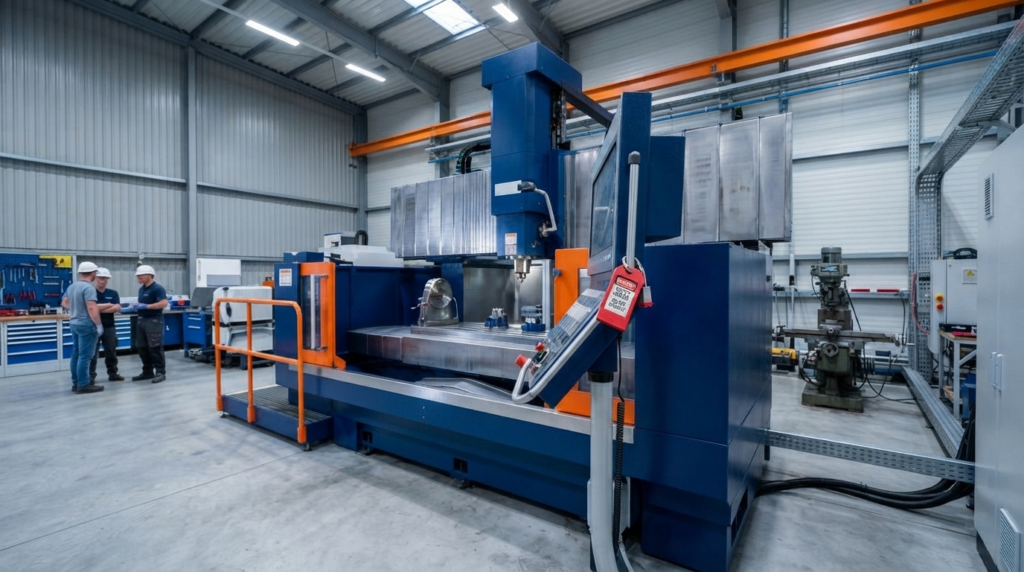
What Does a Red Tag Actually Mean?
A red tag is issued by the AHJ — typically the local building department, fire marshal, or electrical inspector — when equipment lacks the required safety certification or presents a compliance concern that prevents it from being legally energized or placed into service.
The AHJ has the authority to determine whether equipment can occupy a space and be put into service. If they're not satisfied that the equipment meets applicable safety standards, they can and will issue a red tag. The equipment stays tagged until the AHJ is satisfied — and that satisfaction typically requires a recognized third-party evaluation.
Common Reasons Equipment Gets Red-Tagged
| Reason | What It Means |
| No NRTL certification | Equipment was manufactured or imported without a recognized safety listing from an NRTL like UL, CSA, or ETL. |
| Imported without North American certification | Foreign-manufactured equipment that meets standards in its home country but was never evaluated to US/Canadian requirements. |
| Modified after original certification | Equipment that was altered after it received its original listing, voiding the certification. |
| Custom-built equipment | One-of-a-kind or custom machinery built without going through a standard certification process. |
| Expired or unrecognized certification | Certification from a body no longer recognized by OSHA, or a listing that has lapsed. |
| Inspector unfamiliarity | Occasionally, legitimate certification marks that are unfamiliar to the local inspector trigger a tag pending verification. |
Can the Equipment Be Used While You Wait?
In some cases, yes. PSC regularly works with AHJs to negotiate temporary authorization to operate the equipment while the field evaluation is being conducted. This isn't guaranteed — it depends on the AHJ, the nature of the equipment, and the risk level involved — but it's a conversation worth having. If temporary use is critical to your operation, let us know upfront so we can approach the AHJ accordingly.
The Path to Removing the Red Tag: Field Evaluation
The most common resolution for a red-tagged piece of equipment is a field evaluation (FE) conducted by an NRTL-accredited field evaluation program. The evaluator comes to the equipment's location, assesses it against the applicable product safety standard, and if it passes, affixes a certification label that the AHJ can accept.
What to Have Ready Before the Evaluator Arrives
Having your documentation organized before the field evaluation saves time and reduces the chance of delays. Here's what to pull together:
- Bill of Materials — confirming critical components connected to line voltage, including motor drives, filters, power supplies, terminal blocks, wiring, fans, PLCs, and similar items
- Component identification — manufacturer name, catalog number, ratings, and NRTL certification file numbers for each critical component
- Electrical schematics
- Installation and user manuals
- Any existing test reports or manufacturer documentation
The more complete your documentation, the faster the evaluation goes. If components are unlisted or documentation is incomplete, the evaluator may need to conduct additional investigation — which adds time and potentially cost.
How Quickly Can This Be Resolved?
PSC's standard response for red-tag situations is on-site within 48 hours — often the next business day. If the equipment passes the field evaluation on the first visit, it gets labeled that day and the red tag can be removed. If deficiencies are found, PSC will work with you to understand what needs to be corrected and how quickly it can be addressed.
The cost of a field evaluation typically ranges from $3,000 to $10,000 depending on the complexity of the equipment and how many pieces need to be evaluated. That number needs to be weighed against the cost of downtime — for most operations, the math is straightforward.
Don't Ignore a Red Tag
Continuing to operate red-tagged equipment isn't just a compliance issue — it carries real consequences. Fines from the AHJ, forced shutdown of operations, liability exposure if something goes wrong, and a damaged relationship with the local building department that can complicate future projects. The faster you move to resolve it, the better the outcome.
If your equipment has been red-tagged or you're concerned about equipment that may not have proper certification, contact PSC at 877-804-3066 or productsafetyinc.com. We'll assess your situation and get someone out to you as quickly as possible.
Frequently Asked Questions
Q: Who has the authority to issue a red tag?
A: The Authority Having Jurisdiction — typically the local building department, fire marshal, or electrical inspector. The specific AHJ depends on the type of facility and the nature of the installation. In some cases, multiple authorities may be involved.
Q: Can I remove the red tag myself once I think the issue is fixed?
A: No. The red tag was placed by the AHJ and only the AHJ — or a party they authorize — can remove it. Removing a red tag without authorization can result in additional fines and legal consequences, and it doesn't resolve the underlying compliance issue. The correct path is to address the deficiency through a field evaluation and obtain the required certification, then work with the AHJ to have the tag removed.
Q: What if the equipment fails the field evaluation?
A: Product Safety Consulting will document the deficiencies and help you understand what needs to be corrected. In many cases, corrections can be made and the evaluation completed without a full second visit. Where more significant rework is required, PSC will outline what's needed and support the re-evaluation process. The goal is always to get you to a passing result as efficiently as possible.
Q: Is a field evaluation label recognized everywhere in the US?
A: The US and Canada are broadly accepting of field evaluation labels from accredited programs. Most AHJs recognize labels from OSHA-approved NRTLs that operate field evaluation programs. Occasional exceptions exist at the local level, which is why working with an established, accredited program matters.
Q: Can I prevent red-tag situations before they happen?
A: Yes. If you're purchasing imported equipment, custom-built machinery, or used equipment without clear certification documentation, have it evaluated before installation rather than after. A proactive field evaluation is faster, cheaper, and far less disruptive than dealing with a red tag after the fact.
Product Safety Consulting, Inc. | Bensenville, IL | 877-804-3066 | productsafetyinc.com